
No need to head off to Africa for wildlife-spotting. You can have your own little Daffodil Line Safari right here. There is so much nature to enjoy along our route, like the Woodcock.
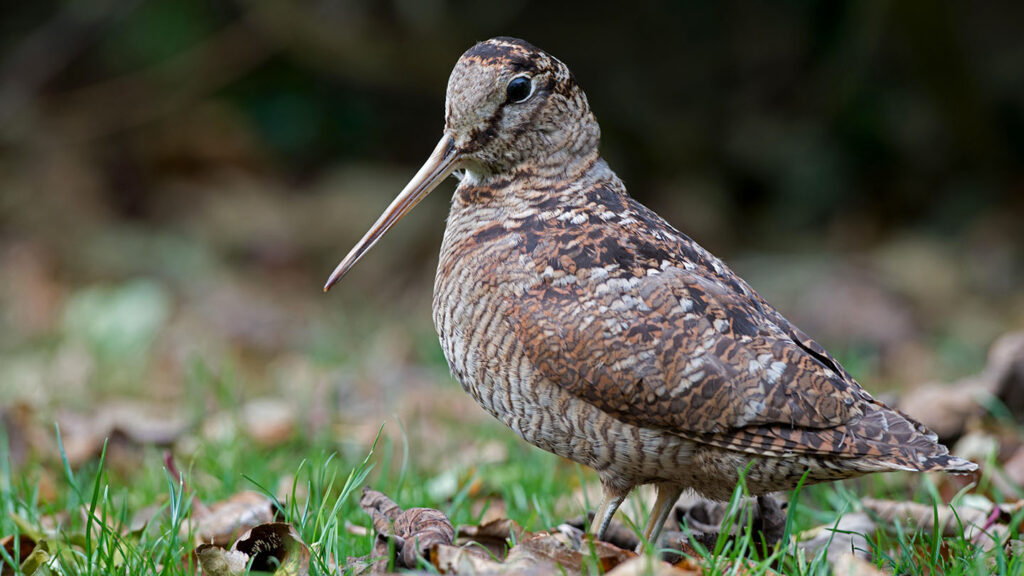
The Woodcock is a shy, dumpy bird, notable for its short legs, broad feet, and a long beak. This specialised beak is used to search for food in muddy wetlands, allowing the bird to probe beneath the surface for sustenance.
Remarkably well-camouflaged, the Woodcock’s plumage blends seamlessly into its surroundings. Although similar in shape to the Snipe, the Woodcock is larger in size, which distinguishes it from its relative.
Most Woodcock are resident in the UK throughout the year. However, during the winter months, their numbers are bolstered by birds arriving from as far away as Russia, joining the local population. We are lucky to have a population in the south west; Dymock Woods is a good place to see them, particularly around the Golf Course car park. They frequent open areas of conifer woodland, wetland, and marsh.
As a wading bird, the Woodcock feeds in muddy, shallow water. Its diet is varied, consisting mainly of worms, larvae, and insects, all of which it locates by probing with its long beak.
Spring is the best time to see them in our woodlands, especially at dawn and dusk. The males perform a display known as ‘Roding’. They take flight above the tree canopy, calling with a combination of grunts and squeaks, creating territory and attracting a mate. These elusive birds, for a short while, lose their shyness and are well worth observing.
Unfortunately, it is rated a ‘Bird of Concern’ and is a protected species.
Did You Know?
The pin feather of the Woodcock (the very new growth) was highly prized for artists’ brushes, being used for very intricate work.