It is the summer of 1226. King Henry III is riding west from Gloucester, heading for Hereford along the ancient road through the Forest of Dean. He passes through a small but busy settlement – a town that has grown up around a Norman priory, sitting at the crossing point of droving routes where Welsh cattlemen bring their livestock east to Gloucester’s markets.
Whether the charter was sealed that very day, or whether the priory’s monks had petitioned the court in advance, we cannot say for certain. But in 1226, Henry III granted Newent the right to hold an annual fair. It was, in the driest possible legal language, a piece of administrative paperwork. In practice, it was the moment that changed everything.
Eight hundred years later, Newent is celebrating.
A Charter that Made a Town
To understand why that piece of parchment mattered so much, you have to understand what a Royal Market Charter actually meant in 13th-century England. It wasn’t just permission to put up a few stalls. It was legal protection – no rival market could be established within a day’s travelling distance, roughly ten miles. That rule, incidentally, still stands in English law today, which is why Ledbury and Ross-on-Wye, both just over ten miles from Newent, each grew as independent market towns rather than satellites of one another. The charter drew an invisible circle around Newent and said: this is a place of trade.
And Newent needed that protection, because it had competition. Four miles to the north, Dymock was a settlement of considerable size and antiquity – a former royal estate with deep Anglo-Saxon roots.Both towns competed for the same trade, the same drovers, the same farmers and merchants.
Only one became a thriving market town. There was no dramatic moment of change. People simply, gradually, chose Newent instead – drawn by the priory’s commercial ambition, the busy droving road to Gloucester, and the legal certainty of a Royal Charter. Dymock, for all its ancient credentials, is today a beautiful and peaceful village. Newent a bustling town. History, it turns out, is not always fair – but it does tend to favour the town with the better road and the more determined monks.
The September Fair and the Noble Onion
The annual fair granted in 1226 grew, over the centuries, into something quite remarkable. But before we get to onions, it is worth pausing on what those early medieval fairs actually meant for a small town like Newent.
The fair didn’t just bring local farmers and their produce. It brought merchants from across Britain and beyond, carrying goods that Newent could never have produced or stocked on its own – spices, fine cloth, wines, metalwork, exotic fruits, and luxury items from as far afield as the Mediterranean. For most ordinary people, the annual fair was their only chance to buy such things. It was a window onto the wider world.
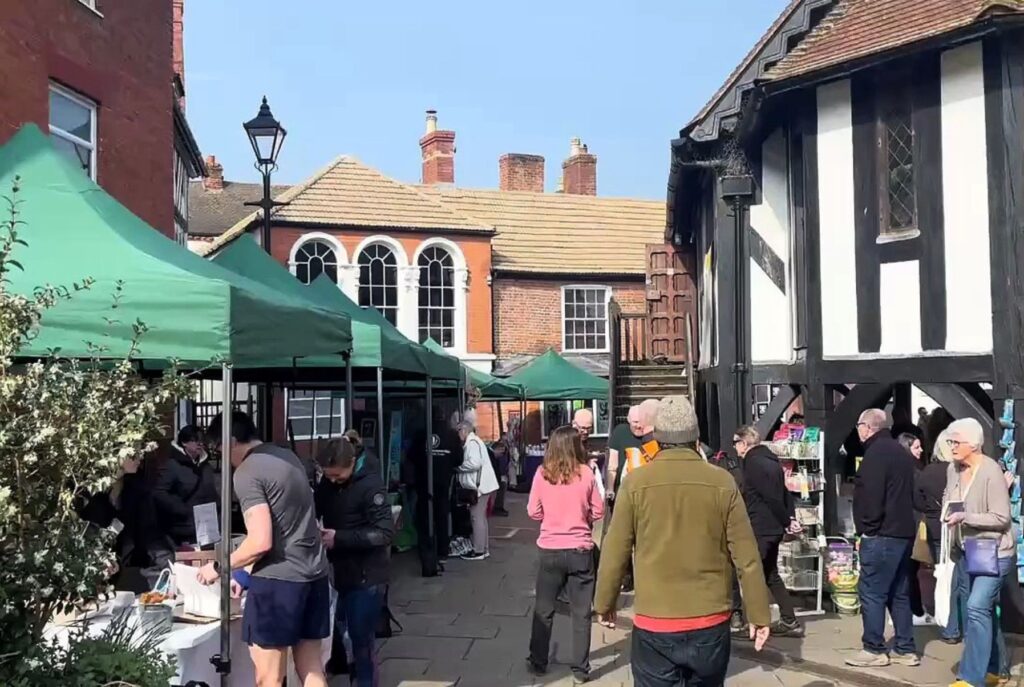
And the town itself thrived on the visitors. Innkeepers, food sellers, stablers, and craftspeople all depended on those weeks of trade. The influx of merchants and travellers created demand for lodging, provisions, and services that sustained local jobs and businesses long after the last stall was packed away. The priory that had lobbied so hard for the charter understood this perfectly – the fair wasn’t just about the tolls it could collect; it was about making Newent a place that the world came to.
By the 19th century, that tradition had crystallised around a very particular commodity. Onions grown in Evesham were brought south by traders and sold to Welsh drovers passing through – and the Newent Onion Fayre grew to such importance that the price of onions set here was used as a benchmark across the whole region, from South Wales to Birmingham. And in a lovely echo of the fair’s international origins, the Breton Onion Johnnies – those iconic cyclists in striped shirts and berets, laden with strings of pink Roscoff onions – would have visited too. For one glorious September weekend, every year, this small Gloucestershire town was the onion capital of England.
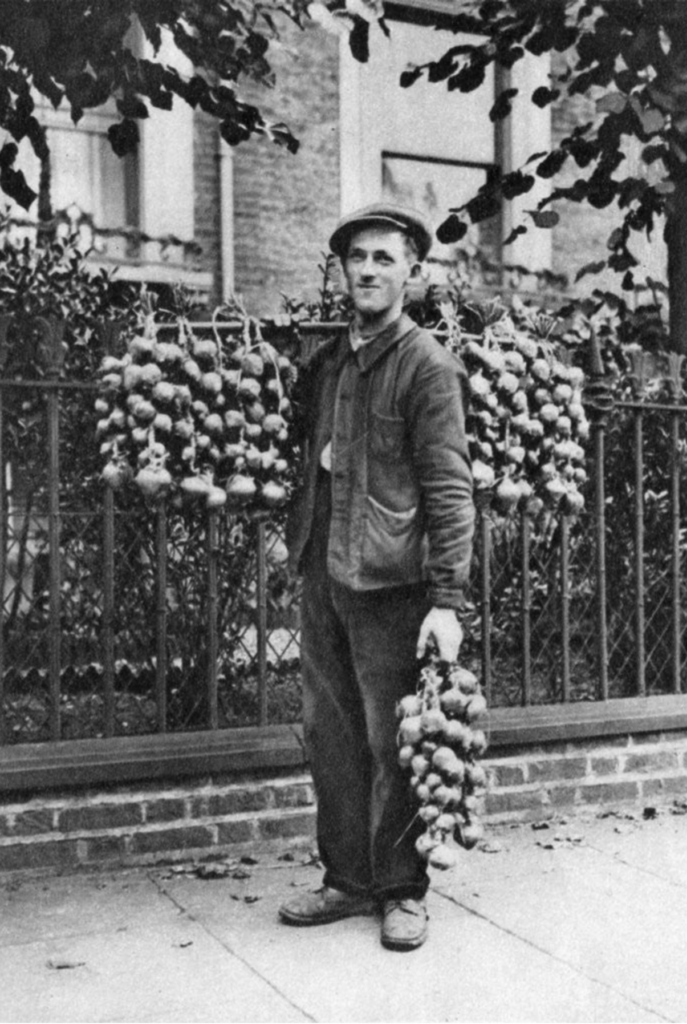
The original fair died out in the war years of the early 20th century. But in 1996, a group of local volunteers – armed, famously, with nothing more than a blank sheet of paper and a road closure notice – brought it back. For 24 years, the Newent Onion Fayre drew up to 15,000 visitors to a town of 5,500 people, tripling its population for a single September Saturday. Then Covid came, momentum was lost, and the future looked uncertain. But true to the spirit of 1226, Newent regrouped, reimagined, and came back – with the new Newent Celebrates event launched in 2025, combining the legendary onion-eating competition with Civil War re-enactments and street entertainment. The noble onion endures.

Why Markets Still Matter
This isn’t just a charming historical story. It matters right now, in 2026, in ways that would have been entirely familiar to the monks of Cormeilles Priory.
Markets and street trade are the lifeblood of rural market towns. Research shows that a thriving local market increases town centre footfall by around a quarter – and with rural high streets under sustained pressure from online shopping, out-of-town retail, and the closure of banks and services, that footfall is not a luxury but a necessity. Every pound spent at a market stall, a food festival, or a street fair is a pound that stays in the local economy, supporting local jobs, local producers, and the local businesses that give a town its character.
Parliament debated this very point in 2025, with MPs arguing that market towns need three things above all: relief from punishing business rates, support for small businesses, and – the third one will sound familiar – good public transport. It is almost as if someone planned it.
A Summer to Remember
And so in this, its 800th year as a Royal Chartered Market Town, Newent is doing what it has always done best: bringing people together to trade, celebrate, eat, drink, and enjoy themselves in the open air.
The programme is extraordinary. Monthly Town and Country Markets feature live entertainment throughout the summer. Explore Newent in June invites everyone to discover the town afresh, with a free community picnic by the lake. Stage Under the Stars, outdoor theatre, and a Food and Drink Festival fill the summer evenings and weekends. Newent-on-Sea sees the beach come to town – sand, deckchairs and all. And in September, Newent Through the Ages walks the town back through eight centuries of history.
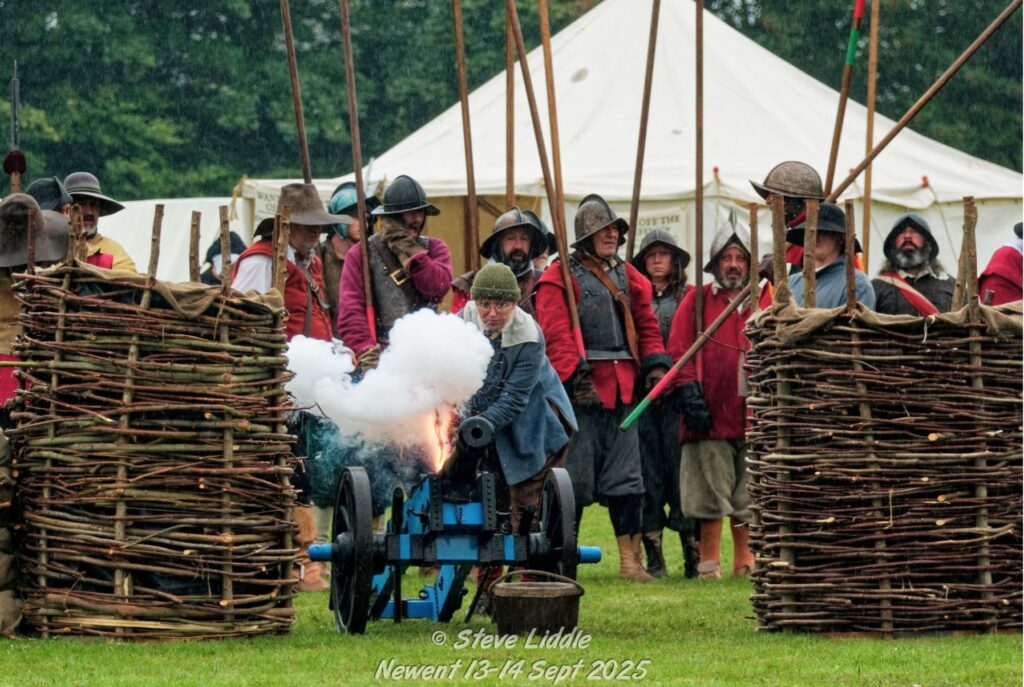
In 1226, a king rode through and signed a piece of paper. He probably didn’t stop long. But eight hundred years on, his decision is still bringing people to Newent – still filling the streets, still driving the local economy, still giving this small, remarkable town its reason to celebrate.
This Saturday marks the last hurrah of our summer of celebrations. Hop on the Daff. Come and join the party.