
The sight and sound of swifts on the wing is a sure sign that summer is here. But their numbers have been declining in the UK due to lack of nesting sites. Ledbury Swift Project is working to reverse that trend in our local area.
Swifts are remarkable birds known for their long migratory journeys. These journeys are awe-inspiring, demonstrating the stamina and determination of these birds, as they arrive in Britain from Africa in early May to breed before heading back to their winter home in late July or early August.
Swifts are colonial and so usually nest in groups. They will use the same nest site each year. Swifts pair for life and nest sites are generally high up just inside the roof space on buildings, at the edge of eaves or beneath roof tiles so the birds are able to drop into the air from the nest entrance. Older buildings are favoured as these frequently offer suitable gaps to access nest sites.
In May and early June swifts can be seen returning to nest sites with nest material, especially in the morning and at dusk they return to roost at the site. Eggs hatch in late June so from late June through July breeding adults will be returning to the nest every hour or so with food for their young. Young birds looking for a future nest site will fly past prospective sites ‘’screaming’’ – the archetypal ‘Sound of Summer’ – and may brush the entrances with their wings. Resident birds respond by coming to the entrance and screaming back, this helps the birds find out where colonies are and which holes are vacant. The presence of a low flying screaming party near to buildings indicate nest sites are nearby and so birds can be seen returning to these sites at dusk.
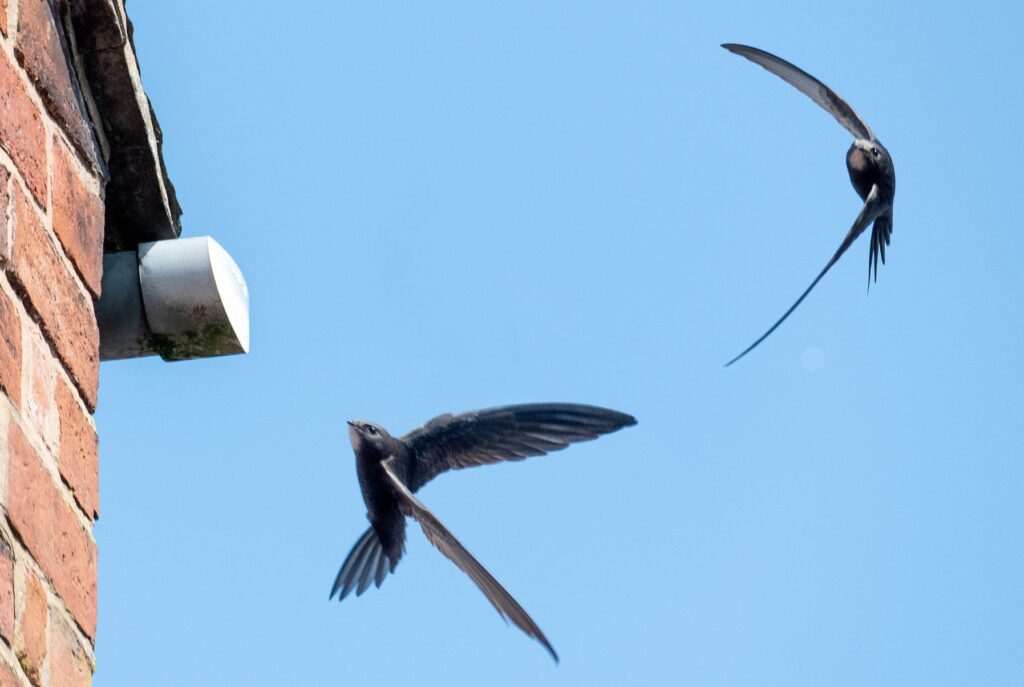
The swift population in Britain has suffered a worrying decline, with an estimated fall of more than 50% between 1995 and 2015.
A lack of nesting sites is seen as a key factor in this trend, with modern buildings lacking the small gaps swifts need to build their nests. The species is also likely to have been affected by a decline in the numbers of its insect prey and climate change.
In early May 2018, members of the Ledbury Naturalists Field Club noted that scaffolding on the Barrett Browning building (the old Ledbury library) was still in place from maintenance work and this could be preventing swifts from entering known nest sites. Ledbury Places now manage the building and they kindly agreed to allow the erection of six swift boxes while the scaffolding was still in place.
It was clear that this may not be an isolated case and so the Ledbury Naturalists Field Club Swift Project was created with the aim to identify, safeguard and create new swift nest sites in Ledbury, being extended to Ross on Wye and neighbouring villages along the Daffodil Line Bus Route in future.
As swifts return to Britain, please consider providing nest sites to help reverse their decline and ensure their successful breeding season. Anyone who would like to help or report swift colonies should contact admin@ledburynaturalists.co.uk.